Why Is My Wi-Fi Slow at Night? 9 Common Causes and Fixes

Disclosure: We may earn a commission from qualifying purchases through links on this page, at no extra cost to you. Learn more.

If your Wi-Fi crawls in the evening but flies during the day, you’re not imagining it. Here are the most common causes — and what actually fixes them.

1. Network congestion (the #1 cause)

Evenings are peak internet hours. Your whole neighbourhood streams at once, which can slow your internet provider’s local network. Test at different times; if it’s always slow at night specifically, congestion is likely.

2. Wi-Fi channel interference

Neighbouring routers crowd the same channels after work hours. Log into your router and switch to a less congested channel, or enable the 5 GHz / 6 GHz band, which is faster and less crowded than 2.4 GHz.

3. Too many devices at once

Smart TVs, phones, consoles, and smart-home gear all compete in the evening. Wi-Fi 6/6E routers handle many devices far better than older models.

4–9. Quick fixes to work through

  • Restart your router weekly — memory leaks and heat degrade performance.
  • Move the router central and elevated, away from walls, metal, and microwaves.
  • Update firmware — vendors ship performance and security fixes.
  • Check for background updates (console/PC downloads) hogging bandwidth.
  • Scan for dead spots — weak coverage looks like “slow” Wi-Fi. See how to fix Wi-Fi dead spots.
  • Consider your plan — if every device is slow at peak, you may have outgrown your speed tier.

Still slow after all that?

If coverage is the issue, a mesh upgrade often helps. Estimate what your home needs with our Wi-Fi Coverage Estimator, then see current routers on Amazon.
How to Fix Wi-Fi Dead Spots (Free Fixes First)

Disclosure: We may earn a commission from qualifying purchases through links on this page, at no extra cost to you. Learn more.

A Wi-Fi dead spot is a room or corner where the signal drops or disconnects. Before buying anything, work through these free fixes — then upgrade only if you still need to.

Free fixes to try first

  1. Reposition the router — central, elevated, and out in the open. Corners and closets kill range.
  2. Point antennas correctly — for multi-floor coverage, angle some horizontally.
  3. Switch bands/channels — 2.4 GHz travels further through walls; 5 GHz is faster at close range. Change to a less crowded channel.
  4. Remove interference — keep the router away from microwaves, cordless phones, and large metal objects.
  5. Update firmware and reboot.

If free fixes aren’t enough

  • Wi-Fi extender — cheapest option; fine for one stubborn room, but can halve speed.
  • Mesh system — the best fix for whole-home dead spots; nodes hand your devices off seamlessly.
  • Wired access point / powerline — most reliable if you can run Ethernet or use existing wiring.

How much hardware do you need?

Use our Wi-Fi Coverage Estimator to see whether a single router, a 2-node, or a 3-node mesh suits your home. Then compare mesh systems and extenders on Amazon.

How Many Wi-Fi Access Points Do You Need?

Disclosure: We may earn a commission from qualifying purchases through links on this page, at no extra cost to you. Learn more.

Wi-Fi Coverage Estimator

A quick planning estimate for how much Wi-Fi hardware a home this size may need. This is guidance, not an RF survey.

Disclosure: some links below are affiliate links. We may earn a commission from qualifying purchases at no extra cost to you. This never affects our recommendations.

Rule of thumb: one good router or access point reliably covers about 1,500 sq ft on a single level. Beyond that — or through thick walls and multiple floors — you’ll want additional nodes. Use the estimator below for your home, then read on for the reasoning.

What affects coverage

  • Square footage — the biggest factor.
  • Walls and construction — drywall is easy; brick, concrete, and metal cut range sharply.
  • Floors — signal weakens going up or down between levels.
  • Device count — many simultaneous devices favour Wi-Fi 6/6E hardware.

General guidance

Home size Typical setup
Up to ~1,500 sq ft, one floor Single quality router
1,500–3,000 sq ft or 2 floors 2-node mesh
3,000–5,500 sq ft 3-node mesh
5,500 sq ft+ or dense walls 3+ nodes or wired access points

Access point vs. mesh node

A mesh node connects wirelessly and is plug-and-play — best for most homes. A wired access point connects by Ethernet and is more reliable and higher-performance, but needs cabling. If you can run Ethernet, wired backhaul is the gold standard.

Next steps: read our networking hub, and if you’re choosing hardware, compare current mesh systems on Amazon.

What Size Power Bank Do You Need? (By Device and Trip)

Disclosure: We may earn a commission from qualifying purchases through links on this page, at no extra cost to you. Learn more.

The right power bank size depends on what you’re charging and how long you’ll be away from an outlet. Here’s a simple way to choose without overpaying for capacity you’ll never use.

Match capacity to your need

Use case Recommended capacity Why
Topping up a phone during the day 5,000–10,000 mAh 1–2 phone charges, pocketable
All-day travel / one phone 10,000–20,000 mAh 2–5 charges, still airline-friendly
Multiple devices / weekend trip 20,000–26,800 mAh Phone + earbuds + tablet
Laptop / camping / off-grid 25,000 mAh+ with USB-C PD Higher wattage output needed

Don’t just look at mAh

  • Output wattage (USB-C PD): to fast-charge a phone you want 20 W+; for laptops, 60–100 W.
  • Real charges are lower than the label — expect roughly 70–85% efficiency. Our Power Bank Calculator shows the realistic number for your device.
  • Air travel: stay under 100 Wh (about 27,000 mAh) to avoid airline approval. See power banks on a plane.

Once you know your target capacity, browse current options: See Power Banks on Amazon.

How Many Times Can a 20,000mAh Power Bank Charge a Phone?

Disclosure: We may earn a commission from qualifying purchases through links on this page, at no extra cost to you. Learn more.

Power Bank Calculator

Estimate how many full charges a power bank will give your device. Real-world results are lower than the raw mAh figures because of conversion losses.

Typical real-world efficiency is about 70–85%. Default 80%.

Disclosure: some links below are affiliate links. We may earn a commission from qualifying purchases at no extra cost to you. This never affects our recommendations.

Short answer: A 20,000 mAh power bank realistically recharges a typical smartphone 3 to 5 times — not the 6+ the raw numbers suggest. That’s because of conversion losses. Use the calculator below to get a number for your exact phone.

Why you don’t get the full capacity

Power banks store energy at 3.7 V but charge your phone at 5 V or higher. Converting voltage loses energy as heat, so real-world output is typically 60–85% of the label. Fast charging, a warm battery, and cable quality all reduce it further.

The math

Charges = (power bank mAh × efficiency) ÷ phone battery mAh.

For a 20,000 mAh bank at 80% efficiency charging a 3,200 mAh phone: (20,000 × 0.8) ÷ 3,200 = 5 full charges. A phone with a bigger 5,000 mAh battery would get about 3.2 charges from the same bank.

Real-world examples

Phone battery Approx. full charges from 20,000 mAh
3,000 mAh (compact phone) ~5.3
4,000 mAh (mid-size) ~4.0
5,000 mAh (large/flagship) ~3.2

Flying with it? A 20,000 mAh bank is about 74 Wh, so it’s fine in carry-on — see can you take a power bank on a plane.

Ready to buy? Compare Power Banks on Amazon.

Can You Take a Power Bank on a Plane? (2026 Rules)

Disclosure: We may earn a commission from qualifying purchases through links on this page, at no extra cost to you. Learn more.

Short answer: Yes — but a power bank must go in your carry-on bag, never checked luggage, because it contains a lithium-ion battery. Most consumer power banks are allowed without special approval, and the deciding factor is the battery’s watt-hour (Wh) rating, not its size.

The watt-hour rules (US TSA/FAA and most airlines)

  • Under 100 Wh — allowed in carry-on, generally no airline approval needed. This covers almost every phone-charging power bank.
  • 100–160 Wh — allowed with airline approval, usually a maximum of two spares.
  • Over 160 Wh — not permitted on passenger aircraft.

How to convert mAh to Wh

Power banks are labelled in mAh, but airlines care about Wh. The formula is:

Wh = (mAh ÷ 1000) × battery voltage (lithium cells are 3.7 V).

So a common 20,000 mAh power bank is (20 × 3.7) = 74 Wh — comfortably under the 100 Wh limit. Even a large 26,800 mAh bank is about 99 Wh, still under the cap. Many power banks now print the Wh rating on the case.

Quick reference

Capacity Approx. Wh Allowed?
10,000 mAh 37 Wh Yes, carry-on
20,000 mAh 74 Wh Yes, carry-on
27,000 mAh ~100 Wh Yes / borderline — check
Over ~43,000 mAh >160 Wh No

Practical tips

  • Keep power banks in your carry-on and, ideally, in a pouch so the terminals can’t short against keys or coins.
  • Rules are set by aviation authorities and individual airlines and can change — confirm with your airline and the TSA/your national authority before flying, especially for international trips.
  • Not sure how many charges your bank actually delivers on a trip? Use our Power Bank Calculator to plan.

Shopping for a travel-friendly bank under 100 Wh? See current options: Browse Power Banks on Amazon.

Decoding the Drone Enigma: New Jersey’s Mysterious Skies

Decoding the Drone Enigma: New Jersey's Mysterious Skies

Unpacking the Drone Mystery in New Jersey

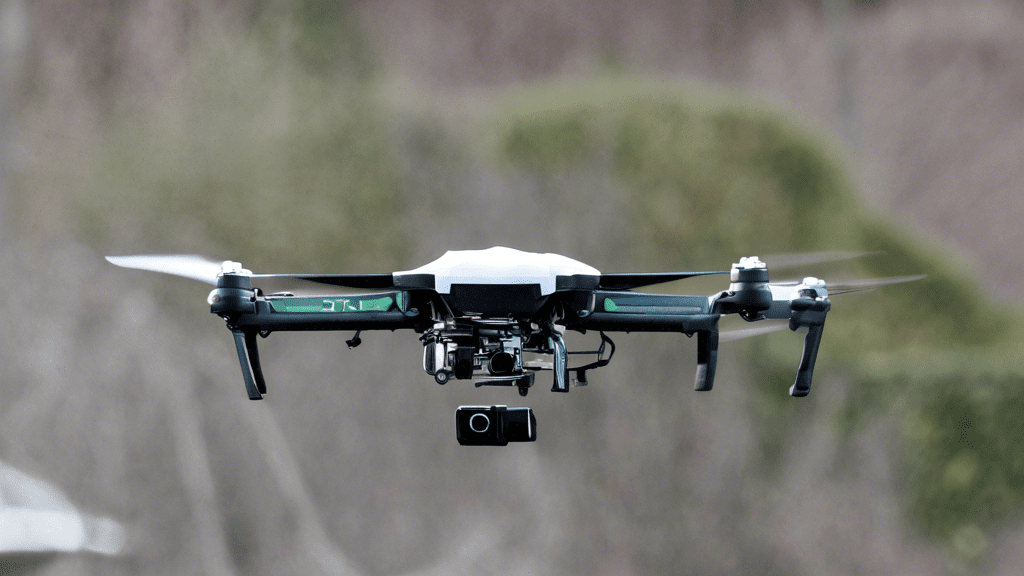
As of December 8, 2024, New Jersey has become the center of attention due to a series of mysterious drone sightings that have taken locals by surprise. These sightings first began on November 18 and, much to everyone’s bafflement, haven’t stopped. The FBI is now directly involved, leading a multifaceted investigation into this unusual phenomenon that’s caught the eye of residents and authorities alike.

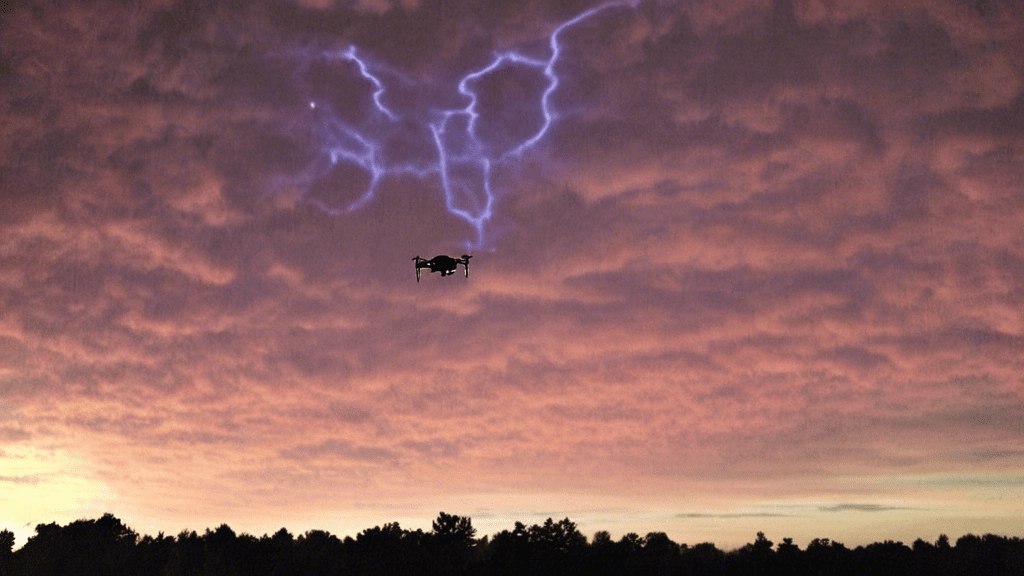
The sightings have been reported across various counties in New Jersey, ranging from Morris and Somerset to the more recent sightings in South Jersey, including Burlington County. Witnesses have described these drones as large and ominous, flying under the cloak of night, illuminated by blinking lights. Some eagle-eyed observers even claim to have seen fixed-wing aircraft, adding to the enigma. It raises the question: what exactly are these drones up to?

The Impact on Community and Response Efforts

While the mysterious drones might sound like a sci-fi thriller, the situation has had real-life consequences. For instance, on November 26, a medevac helicopter was forced to divert due to a drone flying dangerously close to its landing zone. This incident highlights the potential hazards these drones pose, not just for aerial rescue operations but for public safety in general.

The fact that these drones have been spotted near sensitive locations, such as Picatinny Arsenal—one of the U.S. military’s key research facilities—and even near President-elect Donald Trump’s golf course, has only intensified concerns. The authorities, including the FBI and local law enforcement, are scrambling to figure out who is behind these flights and what they might be doing. Although no immediate threat to public safety has been identified, the mystery continues to loom over the skies of New Jersey.

The Federal Aviation Administration (FAA) has taken some precautions, implementing temporary restrictions on drone flights in areas where sightings have been reported. Meanwhile, Governor Phil Murphy is collaborating with federal and state Homeland Security officials, including Secretary Alejandro Mayorkas, to ensure a coordinated response. The aim is clear: get to the bottom of this drone mystery while keeping the community safe.

As investigations progress, authorities are urging the public to get involved. If you see something unusual in the sky, the FBI is encouraging you to report it using their tip line at 1-800-CALL-FBI or through their online submission system. Every bit of information could help unravel this puzzling drone saga.

In the coming weeks, all eyes will remain on New Jersey as law enforcement and federal agencies monitor the situation closely, trying to determine who is operating these enigmatic drones and what their true intentions are. The community is left to wonder what’s next in this unfolding mystery, and it’s clear that everyone is hoping for clarity in a situation that has left many feeling uneasy.

Unlocking the Future: How Drone Technology is Evolving Towards 2025

Unlocking the Future: How Drone Technology is Evolving Towards 2025

Drone technology is seriously evolving, and it’s hard to keep up with all the exciting trends popping up as we move toward 2025. From autonomous flight to advanced communication networks, there’s a lot happening that could completely change how we see and use drones. Let’s dive into some of the coolest developments that are shaping the future of this tech!

Autonomous Flight: The Dawn of Drones with Smarts

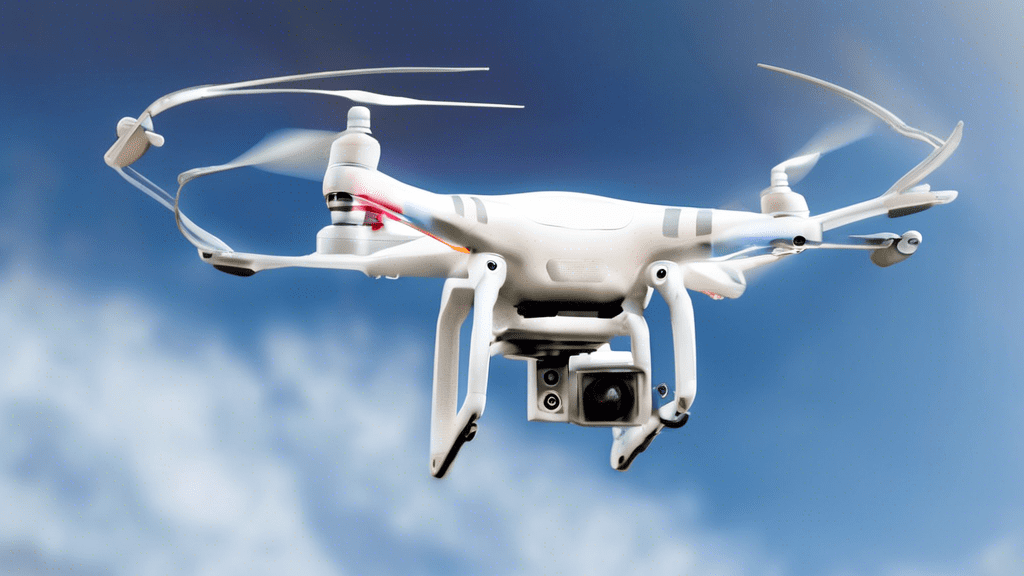
One of the biggest trends in drone technology is the rise of autonomous flight. Thanks to the integration of artificial intelligence (AI) and machine learning, drones can now perform complex tasks with minimal human input. These smart little machines are getting better at navigating tricky environments, making real-time decisions, and reacting to their surroundings. Imagine a drone that can fly through a dense forest without crashing into trees! This advancement not only improves efficiency but also opens up a whole new world of possibilities for various industries.

Adding to this autonomy is the use of sophisticated sensor fusion techniques. By combining data from multiple sources, including cameras, LiDAR, and radar, drones can gain a much deeper understanding of their environment. This improved perception means they can detect and avoid obstacles like pros, making them even more reliable for tasks like search and rescue missions or inspecting infrastructure.

Collaborative and Predictive Features for the Future

Another exciting trend is the concept of swarm intelligence. Drones are not just flying solo anymore; they can work together as a team! Using AI, multiple drones can share information and coordinate their actions. This collaborative approach can significantly enhance efficiency for challenging tasks, especially in search and rescue operations where every second counts. Imagine a fleet of drones swooping in together to locate a missing hiker—how cool is that?

Moreover, with the inclusion of predictive maintenance, drones are becoming even more reliable. AI tech allows them to analyze their own data to predict when they might need repairs or maintenance before a failure happens. This means less downtime, more operations, and reduced costs for users. It’s all about extending the operational life of these flying gadgets!

Lastly, let’s not forget about the advancements in communication networks. With high-speed, low-latency systems like 5G coming into play, drones can transmit data quickly and accurately over larger distances. This is a game changer for beyond visual line of sight (BVLOS) operations, letting drones perform tasks in areas where they can’t be seen directly, such as delivering packages in rural locations or monitoring vast agricultural lands.

As we look forward, it’s clear that the integration of AI, advanced sensors, and improved communication networks is not just a trend; it’s the way of the future for drones. These innovations are paving the way for safer, smarter, and more efficient flying machines that will likely play crucial roles in various sectors—from agriculture to emergency response. Buckle up, because the sky is no longer the limit!

Unraveling the Mystery: Suspicious Drone Sightings Spark Investigation in New Jersey

Unraveling the Mystery: Suspicious Drone Sightings Spark Investigation in New Jersey

The mysterious drone sightings in New Jersey have grabbed everyone’s attention, especially after authorities began investigating reports that started appearing on November 18, 2024. A unified effort among the FBI, New Jersey State Police, and the Office of Homeland Security is underway as they try to get to the bottom of these sightings, which primarily hover around Morris and Somerset counties.

Where Are These Drones Showing Up?

It’s not just a matter of random sightings; these drones have been reported in some pretty notable locations. Many residents have spotted the drones flying along the Raritan River, circling near the Trump National Golf Club in Bedminster, and even above the Picatinny Arsenal, a critical U.S. Army facility in Dover, NJ. With such strategic spots being targeted, it’s no wonder locals are on edge.

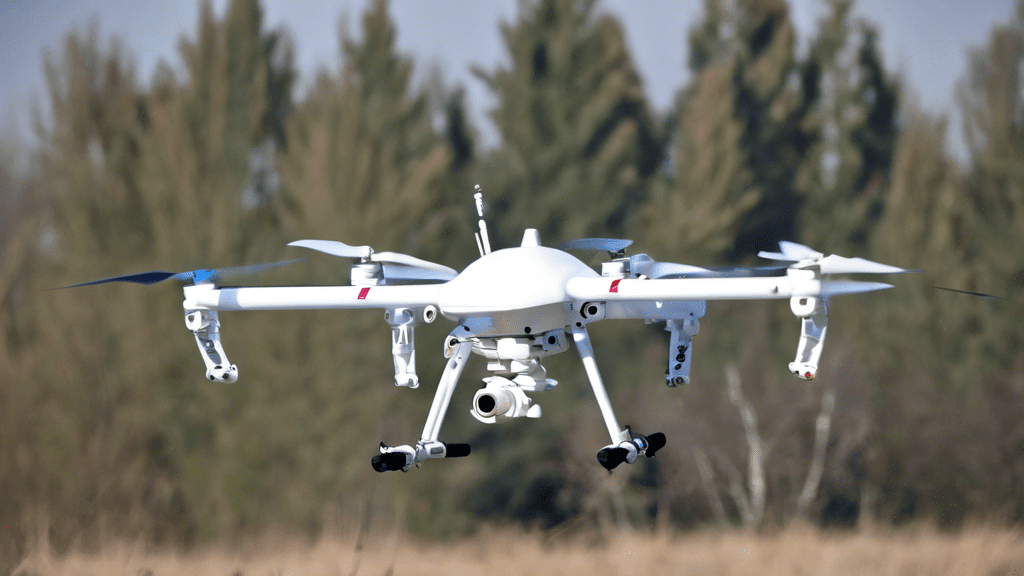
Descriptions of the drones are equally intriguing, with several witnesses noting that they appear to be much larger than the everyday hobbyist models. Some even claim they are the size of small cars! When you think about it, it’s pretty wild to imagine a drone that big buzzing around your neighborhood.

The Bigger Picture

But it’s not just the size that’s causing alarm. Witnesses have observed clusters of these drones flying alongside a possible fixed-wing aircraft. This raises even more questions about their purpose and who might be operating them. In one alarming incident, a medical helicopter’s critical landing was canceled due to drone activity over Raritan Valley Community College, illustrating the serious disruptions these drones can cause.

The Federal Aviation Administration (FAA) isn’t taking any chances either. They’ve put temporary flight restrictions in place over these affected areas to help keep the skies safer while investigators dig into the situation. Thankfully, local authorities have reassured everyone that, so far, there is no immediate danger to the public. But that doesn’t mean residents aren’t feeling uneasy. Concerns are mounting, with people describing the drones as strategically placed, adding to the overall feeling of discomfort.

In an effort to clarify this mystery, the FBI is reaching out to the public, asking for any additional information or videos that might help in piecing together what’s going on. Residents are encouraged to report anything suspicious, whether it be a sighting or a video, through the FBI’s tips line. This plea for public assistance shows just how significant these drone sightings are viewed by authorities.

If you think operating a drone is harmless, consider that drone operators can face legal repercussions if they endanger aircraft or people on the ground. Fines could reach up to $75,000, and the FAA has the authority to suspend or revoke pilot certificates. With multiple agencies currently in pursuit of answers, including the Morris County Sheriff’s Office, tensions remain high as investigations continue.

Ukraine’s Drone Production Surge: A Game-Changer in Modern Warfare

Ukraine's Drone Production Surge: A Game-Changer in Modern Warfare

Ukraine’s Drone Production Boom

Ukraine has been making waves in the realm of drone production, especially in the context of its ongoing conflict with Russia. As of December 2024, the country has not only ramped up its existing capabilities but has also exceeded its ambitious goals. Originally aiming to produce 1 million FPV drones in 2024, Ukraine has reported a surplus, heralding a significant milestone in its manufacturing efforts. This surge is a clear indicator of the nation’s commitment to enhancing its defensive and offensive capabilities through advanced unmanned aerial vehicle technology.

In an exciting announcement, President Volodymyr Zelensky revealed that Ukraine’s annual production capacity has soared to a staggering 4 million drones. This figure marks a remarkable increase from their initial estimates and highlights the rapid development of the drone industry within the country. Alongside this, the diversity in drone types being produced is impressive. With long-range drones capable of flying over 1,000 km, strike drones, reconnaissance UAVs, and payload drop drones, Ukraine is well-equipped to tackle various battlefield scenarios effectively.

Grassroots and International Support

The growth of drone manufacturing in Ukraine isn’t just the result of government initiatives; it’s also fueled by a vibrant domestic industry. Over 200 drone-manufacturing companies are now operating across the country, showcasing a thousandfold increase in production since 2022. This significant growth has created jobs and harnessed local talent, demonstrating how a nation can mobilize its resources in times of crisis.

Financial backing plays a crucial role in this expansion. The Ukrainian Ministry of Defense committed about UAH 30 billion (around $0.7 billion) into drone production in the early weeks of 2024, followed by an additional UAH 24 billion in the summer. Such substantial investments underline the priority that drone technology has become in Ukraine’s military agenda.

On the international front, Ukraine is not going it alone. A coalition aiming to raise $1.8 billion by the end of 2024 is in place to bolster Ukraine’s UAV capabilities further. This support not only aids in acquiring advanced technologies but also enhances the strategic use of drones in the ongoing conflict.

Additionally, civilians are playing a pivotal role in this drone revolution. Groups like Social Drone and Tricky Drones have stepped up to assist in drone assembly and production, reflecting a community spirit dedicated to national defense. The integration of these grassroots efforts with high-tech advancements is proving to be a game-changer in how Ukraine approaches its defense strategy.

In light of these developments, innovative tactics are emerging to counter the Russian drone threat. By employing AI and techniques to spoof GPS signals, Ukraine is not just reacting but proactively strategizing to deal with aerial threats. These developments illustrate a rapidly evolving landscape where technology and creativity blend seamlessly to adapt to battlefield challenges.